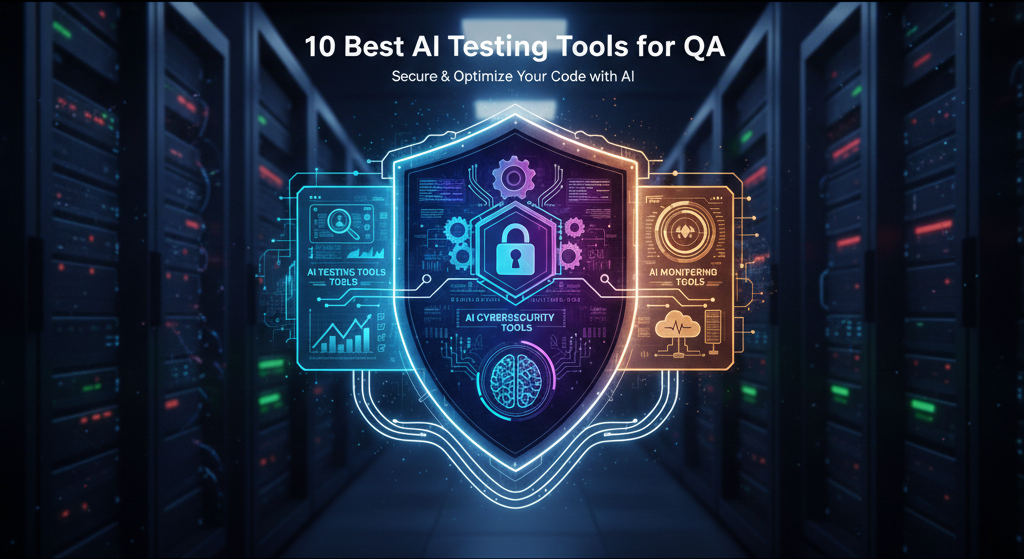
Are you tired of endless bug reports, delayed software releases, and frustrated development teams? In today’s hypercompetitive digital landscape, relying solely on manual quality assurance is no longer a viable option. Development cycles are shrinking rapidly, and user expectations are at an all time high. This reality forces engineering teams to seek smarter, faster, and more efficient ways to validate their applications before deployment. Enter the era of artificial intelligence in software validation. Integrating robust ai testing tools into your workflow is the ultimate game changer for modern development pipelines. These intelligent platforms do much more than just execute repetitive scripts. They learn from your application user interface, adapt to code changes automatically, and predict where failures are most likely to occur.
If you want to maintain a competitive edge and ship software with confidence, you must embrace automation powered by machine learning algorithms. In this comprehensive guide, we will dive deep into the top platforms available on the market right now. We will explore their unique features, methodologies, and how they compare against each other in real world enterprise scenarios. Furthermore, we will discuss how these critical quality assurance solutions work hand in hand with other enterprise systems like ai cybersecurity tools and ai monitoring tools to create an impenetrable and highly performant software ecosystem. Get ready to transform your QA strategy, eliminate testing bottlenecks, and deliver flawless digital experiences to your users.
Why You Need ai testing tools in Your QA Strategy
In my decade of experience optimizing development pipelines for global brands, I have seen countless teams struggle with test maintenance. Traditional automation frameworks are notoriously brittle. A simple change to a button color, a minor adjustment in the page layout, or an updated CSS class can cause hundreds of automated scripts to fail instantly. This false positive nightmare forces QA engineers to spend the majority of their time fixing broken tests rather than writing new ones to expand coverage.
This is precisely the fundamental problem that modern ai testing tools are designed to solve. By utilizing advanced machine learning techniques, these platforms introduce self healing capabilities to your test suites. When an element on the screen changes, the algorithms automatically identify the new attributes and update the test scripts on the fly without human intervention. This single feature saves countless hours of tedious manual labor and allows your engineering talent to focus on strategic product improvements and exploratory testing.
Moreover, achieving comprehensive software quality requires a multi layered approach. While your QA team relies heavily on ai testing tools to verify application functionality and user experience flows, your security operations center is simultaneously utilizing powerful ai cybersecurity tools to detect network vulnerabilities and prevent malicious data breaches. These two pillars of software integrity are deeply interconnected. A bug in your user authentication flow is a functional failure, but it can quickly become an entry point for hackers if not identified early in the staging environment.
Beyond functionality and security, post deployment visibility is absolutely critical to the success of your product. Once your perfectly tested code goes live, you need to ensure it performs optimally under real world traffic conditions. This is where deploying sophisticated ai monitoring tools becomes indispensable. They track application performance metrics in real time, alerting your DevOps team to memory leaks or server bottlenecks before they impact the end user experience. Together, these three technological pillars create a resilient and highly optimized digital product.
The Top 10 ai testing tools to Revolutionize Quality Assurance
1. Testim
Testim is a pioneer in the realm of automated quality assurance. This platform leverages dynamic locators to uniquely identify elements on a web page. Instead of relying on a single static HTML ID, Testim analyzes dozens of attributes for every element. If a developer changes the text or the class name of a specific call to action button, Testim still recognizes it based on other contextual clues. This makes it one of the most reliable ai testing tools for agile teams that push code updates multiple times a day.
Integrating Testim into your continuous integration pipeline is incredibly seamless. It allows developers to run tests concurrently in the cloud, drastically reducing build times. When combined with insights from your company ai monitoring tools, you can easily correlate test execution times with server performance metrics, giving you a complete picture of your release health.
2. Applitools
Visual validation is notoriously difficult to automate using traditional code based scripts. Applitools changes this entirely by introducing Visual AI. Instead of checking if a specific line of code exists in the Document Object Model, Applitools uses advanced computer vision to look at the application exactly like a human user would. It highlights visual regressions, layout shifts, and rendering issues across different browsers and mobile devices.
Applitools stands out among other ai testing tools because of its unparalleled accuracy in visual bug detection. It ignores dynamic content like rotating advertisements or changing dates, focusing only on the structural integrity of the UI. For enterprises strictly enforcing compliance, pairing Applitools with robust ai cybersecurity tools ensures that no unauthorized visual changes or injected malicious overlays compromise the user interface.
3. Mabl
Mabl offers a unified platform for low code test automation. It is designed to be accessible to everyone on the team, from product managers to manual testers. You simply navigate through your application, and Mabl records your actions, translating them into resilient automated tests. Its machine learning algorithms ensure that these tests remain stable as your application interface evolves over time.
One of the major advantages of Mabl is its focus on comprehensive test coverage across the entire software stack. It handles everything from user interface flows to backend API calls. By shifting testing left in the development lifecycle, Mabl helps teams catch defects early. This proactive approach perfectly mirrors the preventative strategies employed by top tier ai cybersecurity tools, ensuring that neither functional bugs nor security gaps make it into the production environment.
4. Functionize
Functionize takes a highly innovative approach to test creation by utilizing natural language processing. You can write your test steps in plain English, and the platform translates your instructions into executable automated scripts. This lowers the technical barrier to entry significantly and allows business analysts and product owners to contribute directly to the QA automation effort.
Among the various ai testing tools available, Functionize is highly regarded for its robust test data management capabilities. It can generate realistic synthetic data for your test environments, ensuring strict data privacy compliance. When evaluating overall system health, enterprise teams often integrate Functionize test results with dashboards powered by their internal ai monitoring tools to track quality trends over multiple release cycles.
5. ACCELQ
ACCELQ is an agile platform that seamlessly automates API and web UI testing without requiring a single line of code. It uses predictive analytics to map out your application architecture, allowing testers to visualize complex user journeys easily. This design first approach ensures that your test coverage aligns perfectly with your actual business processes and user flows.
Many large scale organizations favor ACCELQ because it integrates deeply with popular deployment pipelines. As your software scales to serve millions of users, maintaining strict quality control becomes challenging. Utilizing intelligent ai testing tools like ACCELQ alongside predictive ai monitoring tools provides a safety net that catches regressions both before and after the code is deployed to live production servers.
6. Katalon
Katalon is a comprehensive quality management platform that supports web, API, mobile, and desktop application validation. It provides a rich set of built in keywords and project templates, making it incredibly easy to kickstart your automation journey from scratch. Katalon recent platform updates have heavily integrated machine learning to improve test artifact organization and flakiness detection.
To build a truly secure and reliable application, Katalon users often combine its functional testing capabilities with specialized ai cybersecurity tools. By running security penetration tests in parallel with Katalon functional automated suites, engineering management can ensure that exciting new product features do not inadvertently introduce critical vulnerabilities that could be exploited by malicious actors.
7. Tricentis Tosca
Tricentis Tosca is an enterprise grade continuous testing platform renowned for its risk based testing methodology. Instead of trying to test every single possible scenario, Tosca analyzes your application infrastructure to identify the most critical business paths. This ensures that you get maximum risk coverage with the absolute minimum number of test cases.
Tosca is widely recognized as one of the most powerful ai testing tools for legacy system modernization projects. It supports over one hundred and sixty different technologies, from modern web apps to older SAP environments. When migrating complex enterprise systems to the cloud, pairing Tosca with comprehensive ai monitoring tools is vital to ensure that the newly modernized infrastructure handles high data loads exactly as expected.
8. Keysight Eggplant
Eggplant employs a unique digital twin approach to software validation. It creates a complete model of your application and uses artificial intelligence to automatically generate and execute test cases based on real user behavior patterns. This means Eggplant can discover edge cases and complex bug scenarios that a human tester might never even think to write a script for.
The highly predictive nature of Eggplant makes it a standout choice among ai testing tools. It does not just verify that the software works; it predicts exactly how it will behave under stress. By feeding Eggplant test execution data into your central ai monitoring tools, your operations team can proactively provision server resources before a major marketing launch causes a massive traffic spike.
9. Perfecto
Perfecto is a cloud based testing laboratory that allows teams to test their applications on thousands of real mobile devices and browser combinations. Its intelligent analytics engine automatically classifies test failures, distinguishing between real application bugs and environmental issues like a slow network connection or device lag.
Mobile application quality is critical for modern brand reputation. Using Perfecto alongside advanced ai cybersecurity tools ensures that your mobile applications are not only functionally flawless but also highly secure from mobile specific data breaches. Mobile environments are particularly vulnerable to tampering, making the combination of these specialized technologies absolutely essential for modern app development.
10. ReportPortal
While not a test execution engine itself, ReportPortal is a critical component of any modern QA ecosystem. It is an AI powered test automation dashboard that aggregates results from all your various testing frameworks. It uses advanced machine learning to automatically categorize failed tests, identifying root causes and grouping similar errors together to save triage time.
Integrating ReportPortal with your diverse array of ai testing tools provides unparalleled visibility into your overall software quality. Engineering managers can see exactly where bottlenecks are occurring and allocate resources accordingly. When these quality metrics are viewed alongside security alerts from your ai cybersecurity tools and infrastructure data from your ai monitoring tools, executive leadership gets a complete, unified view of engineering health.
Building a Resilient Digital Ecosystem
Developing high quality software is not a siloed effort. The most successful engineering teams understand that quality assurance, security, and performance tracking must work in absolute harmony to deliver a world class product.
Bridging the Gap with Security Solutions
Functional testing validates that your application does what it is supposed to do. However, it does not guarantee that your application is safe from external threats. This is why integrating your chosen ai testing tools with dedicated ai cybersecurity tools is so important. While your QA platforms verify that the user checkout button processes payments correctly, your security platforms are actively scanning the transaction payload for SQL injection vulnerabilities. Together, they form a comprehensive defense strategy that protects both your user experience and your sensitive corporate data. For more information on security best practices, I highly recommend checking out the OWASP Foundation.
Maintaining Health Post Deployment
Your responsibility for software quality does not end when the code reaches the production environment. Real world user behavior is unpredictable, and infrastructure can fail unexpectedly. This is exactly where ai monitoring tools become your first line of defense. By continuously analyzing server logs, database query times, and frontend rendering speeds, these intelligent monitoring solutions can detect anomalies before they escalate into full blown service outages. By feeding production data from your ai monitoring tools back into your ai testing tools, you can create new automated scripts that specifically test the edge cases discovered in the live environment, creating an infinite loop of continuous quality improvement. Internal processes like QA automation strategies must reflect this cyclical approach.
Key Features to Evaluate Before Making a Decision
When evaluating which platform to integrate into your development pipeline, consider the following critical capabilities to ensure maximum return on investment.
| Feature Category | Description and Business Benefit | Criticality Level |
|---|---|---|
| Self Healing Algorithms | The system automatically updates broken element locators when the application UI changes, drastically reducing manual test maintenance. | High |
| Visual Regression Analysis | Utilizes computer vision to detect unintended layout shifts, font changes, and rendering anomalies across multiple web browsers. | High |
| Seamless CI/CD Integration | Plugs directly into your deployment pipeline to trigger automated test suites automatically whenever new code is committed. | High |
| Cross Functional Reporting | Shares quality metrics effortlessly with your internal ai monitoring tools to provide leadership with unified engineering dashboards. | Medium |
| Security Ecosystem Sync | Allows for parallel execution with corporate ai cybersecurity tools to ensure functional updates do not create security loopholes. | Medium |
FAQ
1. What exactly are ai testing tools?
These are advanced software applications that use machine learning algorithms to automate the creation, execution, and maintenance of quality assurance test cases. They learn from the application behavior to make testing more reliable and far less brittle than traditional coded scripts.
2. How do these platforms reduce maintenance time?
Traditional automation relies on static element locators. If a developer changes a button ID, the test fails. Modern intelligent platforms use dynamic locators, analyzing dozens of attributes. If one attribute changes, the AI uses the remaining attributes to find the element, healing the test automatically.
3. Can I integrate ai cybersecurity tools with my QA workflow?
Yes, absolutely. Best practices dictate running automated security vulnerability scans in parallel with your functional test suites. This ensures that new features are both bug free and highly secure before they are deployed to production servers.
4. Do these platforms replace human manual testers?
No, they do not replace human intelligence. Instead, they handle the repetitive, tedious tasks of regression execution. This frees up human QA engineers to focus on complex exploratory testing, usability analysis, and strategic quality planning.
5. Why should developers care about ai monitoring tools?
Developers need to know how their code performs in the real world. By utilizing advanced observation platforms, developers receive instant alerts about performance bottlenecks or runtime errors, allowing them to issue immediate hotfixes before users abandon the application.
6. Are these solutions suitable for small startups?
Yes. Many vendors offer scalable pricing models or cloud based options specifically designed for smaller teams. Implementing these intelligent automation solutions early in a startup lifecycle prevents technical debt and allows for faster scaling later on.
Elevate Your Software Quality to the Next Level
The digital landscape is evolving at an unprecedented pace, and engineering teams can no longer afford to rely on outdated, manual quality assurance methodologies. As we have explored in this comprehensive guide, integrating sophisticated ai testing tools into your development pipeline is no longer just a luxury; it is an absolute necessity for delivering reliable, high quality software at incredible speed. These platforms empower your team to overcome the chronic bottleneck of test maintenance, expand coverage across complex user journeys, and massively accelerate your time to market.
Remember that achieving true software excellence requires a holistic, ecosystem wide approach. Your automated quality assurance efforts must be tightly coupled with proactive defense mechanisms powered by ai cybersecurity tools to protect user data from ever evolving threats. Simultaneously, you must maintain deep visibility into your live production environment by leveraging state of the art ai monitoring tools to ensure optimal user experience and server performance. By uniting these three critical technological pillars, you create an unbreakable development lifecycle that consistently delights your users and drives sustainable business growth.
If you are ready to stop fighting broken test scripts and start shipping flawless code, the time to act is right now. Evaluate the top platforms we discussed today, request personalized demonstrations from the vendors, and run a proof of concept on your most critical user flows. Have you already implemented any of these intelligent automation solutions in your team workflow? Share your experiences, challenges, and insights in the comments below, and please share this article with your engineering network to help them optimize their software release processes!
To further streamline your workflow, you can read more our article about the SEOJuice AI internal linking tool to see how automation can transform your site’s structure.