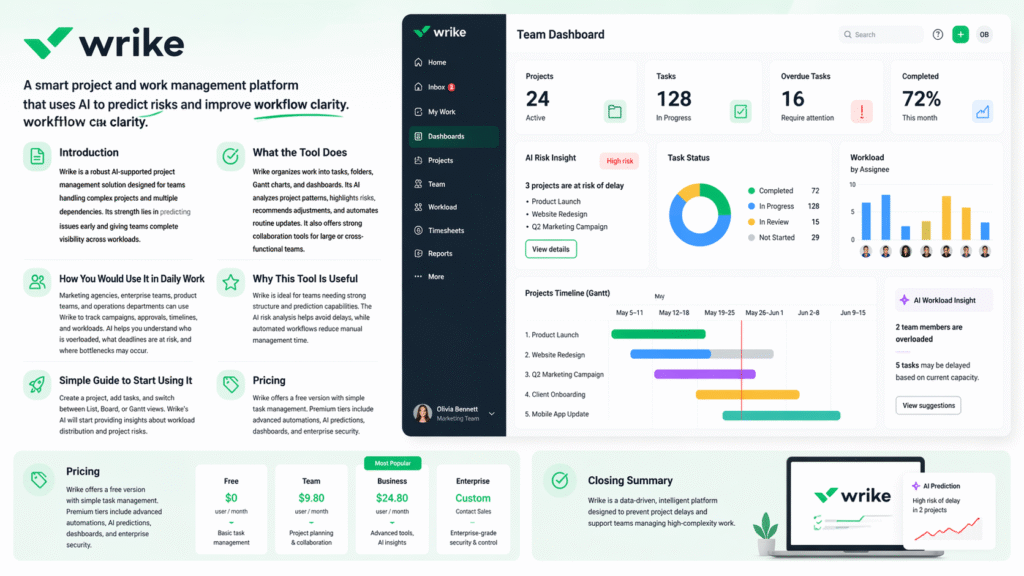
Wrike is a smart, AI-supported project and work management platform designed to help teams manage complex projects efficiently. With built-in artificial intelligence, it predicts risks, automates routine updates, and gives teams complete visibility over workloads. It is ideal for organizations looking to streamline workflows, track dependencies, and prevent project delays while improving overall productivity.
Introduction to Wrike
In modern business environments, teams often struggle with complex projects, multiple deadlines, and interdependent tasks. it addresses these challenges by combining project management, workflow automation, and AI-powered insights into a single platform. Its predictive capabilities allow teams to identify potential bottlenecks, understand resource allocation, and proactively adjust plans. Whether for marketing agencies, enterprise teams, or operations departments, it offers the structure and intelligence necessary for high-performing teams.
What Wrike Can Do
Wrike provides a wide range of project management tools that help teams organize, track, and optimize their work:
- Task and Project Organization – Create tasks, subtasks, folders, and assign them to team members with clear deadlines and priorities.
- Gantt Charts and Timelines – Visualize project schedules, dependencies, and progress using interactive Gantt charts and timeline views.
- AI-Powered Insights – Wrike AI analyzes project data, predicts risks, recommends adjustments, and highlights potential delays.
- Dashboards and Reporting – Generate dashboards that provide real-time insights on project status, workloads, and KPIs.
- Collaboration Tools – Share updates, comments, files, and approvals across teams, making it easy for cross-functional teams to stay aligned.
- Automation – Automate repetitive tasks, notifications, and workflow processes, reducing manual management time.
By combining these features, Wrike helps teams achieve clarity, minimize errors, and maintain control over complex projects.
Using Wrike in Daily Work
it is suitable for a variety of professional contexts:
- Marketing Agencies: Plan campaigns, track approvals, manage creative workflows, and optimize timelines.
- Enterprise Teams: Coordinate large-scale projects, manage multiple dependencies, and monitor workloads across departments.
- Product Teams: Oversee product development cycles, sprint planning, and release schedules.
- Operations Departments: Track task progress, identify resource bottlenecks, and maintain project alignment.
With AI insights, teams can quickly understand who is overloaded, which deadlines are at risk, and where workflow improvements are needed. This enables proactive planning, better decision-making, and smoother collaboration across the organization.
Benefits of Using Wrike
- Predictive Project Management – AI risk analysis helps teams avoid delays and anticipate potential issues before they occur.
- Workflow Automation – Reduce manual updates, task assignments, and notifications with automated workflows.
- Enhanced Collaboration – Teams can communicate directly on tasks, share documents, and approve work without relying on separate apps.
- Complete Visibility – Dashboards and reports give leaders insights into workloads, timelines, and performance metrics.
- Scalable for Teams of Any Size – adapts to small teams, large enterprises, and cross-functional projects.
These benefits make Wrike a robust platform for teams looking to combine structure, visibility, and AI-driven efficiency.
Getting Started with Wrike
To begin using Wrike:
- Create a Project – Name the project and define its objectives.
- Add Tasks and Subtasks – Assign tasks to team members, set deadlines, and define dependencies.
- Choose Your View – Switch between List, Board, or Gantt views based on your workflow preference.
- Leverage AI Insights – Wrike’s AI will analyze workloads, highlight risks, and provide actionable recommendations.
- Collaborate and Track Progress – Share updates, files, and approvals in real-time to maintain alignment across the team.
This simple setup ensures that teams can quickly harness the power of Wrike’s AI capabilities while keeping projects on track.
Pricing Overview
Wrike offers flexible pricing plans to suit different team needs:
- Free Plan: Basic task and project management suitable for small teams.
- Professional and Business Plans: Include Gantt charts, dashboards, reporting, and enhanced collaboration features.
- Enterprise Plan: Offers advanced automations, AI-powered predictions, customizable workflows, and enterprise-level security.
This tiered approach allows organizations of all sizes to benefit from Wrike’s project management and AI capabilities.
Conclusion
Wrike is a data-driven, intelligent project management platform designed to prevent delays and improve team efficiency. Its AI-powered insights, automated workflows, and collaborative tools make it ideal for teams managing complex projects across marketing, product development, operations, and enterprise environments. By providing visibility, predictive risk analysis, and workflow automation, that ensures that teams can focus on high-value tasks, deliver projects on time, and maintain seamless collaboration.