1. Introduction
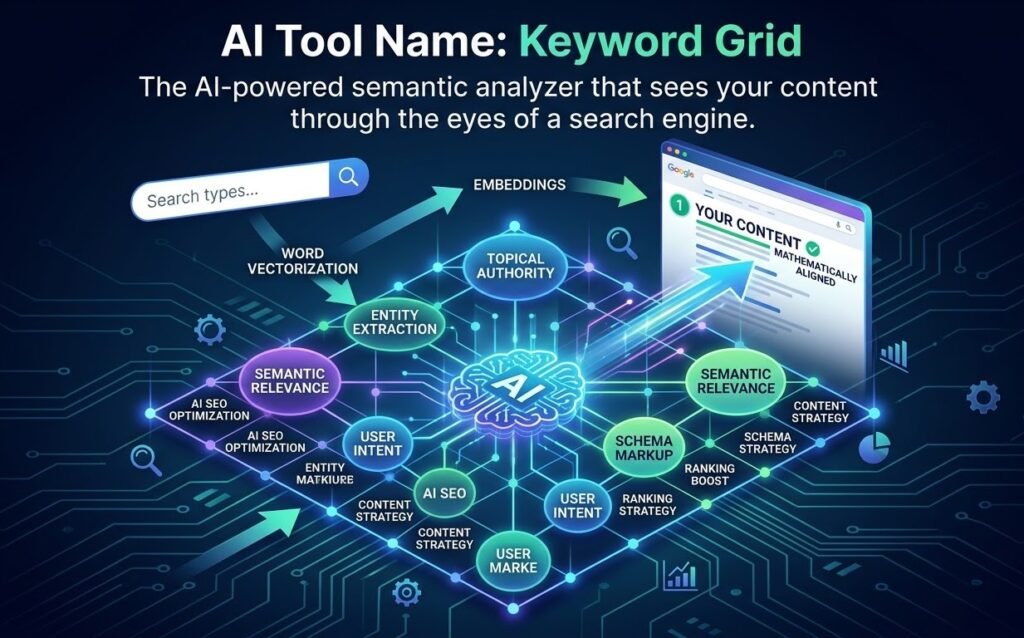
Keyword Grid is an advanced SEO optimization tool that uses the same AI models such as word vectorization and embeddings that power modern search engines. It solves the problem of “SEO guesswork” by moving beyond simple keyword matching to focus on semantic relevance and entity extraction. For my role, it matters because it ensures that every piece of content is mathematically aligned with what search engines (and AI search agents) consider authoritative and high-quality.
2. What the Tool Does
This tool helps with content optimization and search visibility by offering features such as:
- Semantic Keyword Identification: Suggests hyper-relevant terms based on topical authority rather than just search volume.
- NLP Entity Extraction: Identifies the specific “entities” (people, places, concepts) that search engines expect to see in a high-ranking article.
- Schema Markup Inspection: Allows you to analyze the structured data of top-ranking competitors to replicate their technical advantages.
- Bulk Keyword Analytics: Provides traffic and difficulty data for large lists of keywords simultaneously.
These features allow me to bridge the gap between creative writing and the technical requirements of modern, AI-driven search algorithms.
3. How You Would Use It in Daily Work
Keyword Grid fits into the middle and final stages of my content workflow, ensuring that a draft is “search-ready” before it goes live.
- Content Auditing: I would run existing underperforming pages through the tool to identify missing “entities” or semantic gaps.
- Competitor Analysis: During the research phase, I’d use the Schema Inspector to see how rivals are tagging their data.
- AI Search Optimization: I use it to ensure my content is structured properly for visibility in AI-generated answers and overviews.
4. Why This Tool Is Useful
The primary benefit of Keyword Grid is its accuracy; because it uses word vectorization, it understands the intent and context of a topic better than traditional SEO tools.
Benefits include:
- Higher Precision: Reduces the risk of “keyword stuffing” by focusing on natural semantic relationships.
- Faster Ranking: Helps content rank quicker by hitting the specific NLP markers search engines look for.
- Competitive Edge: Provides visibility into the “invisible” technical layers of competitor sites, like their schema strategy.
This tool gives our team a data-backed blueprint for ranking in an era where traditional keyword research is no longer enough.
5. Simple Guide to Start Using It
Setup is straightforward and entirely web-based, requiring no technical installation or coding knowledge to get started.
Steps to begin:
- Create an Account: Sign up on the website and select a plan that fits your monthly credit needs.
- Input Your Content or URL: Paste a draft or a live link into the analyzer to see its current semantic score.
- Apply Recommendations: Follow the AI’s suggestions to add missing entities or semantic keywords to your text.
6. Pricing
KeywordGrid offers a freemium model, allowing users to test basic features for free, with paid plans available for more advanced usage and higher limits.
7. Closing Summary
Keyword Grid is worth exploring because it shifts SEO from a guessing game to a precise science based on how AI actually processes language. It is an essential partner for any role focused on high-stakes organic growth and long-term search authority.