Introduction
Legal work is detailed, time-sensitive, and often repetitive. Lawyers and legal teams spend hours reviewing contracts, checking clauses, identifying risks, drafting revisions, and comparing terms against internal standards. Even a simple agreement can take time when every sentence needs careful review.
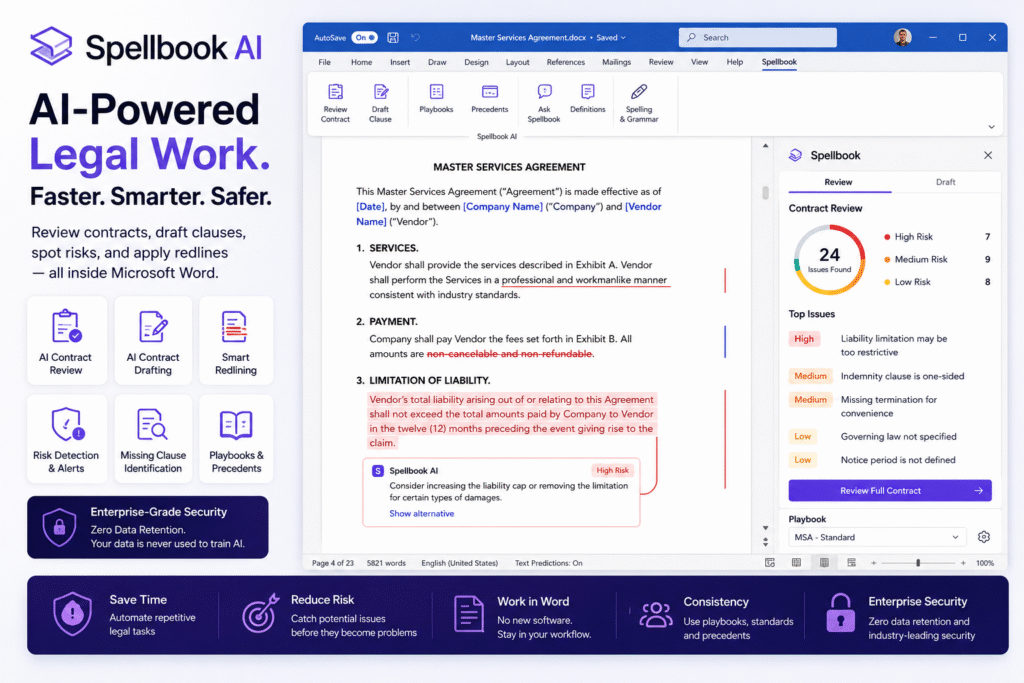
Spellbook AI helps legal professionals speed up contract-related work by bringing AI assistance directly into Microsoft Word. Spellbook describes its product as legal AI for drafting, redlining, and reviewing contracts inside Word, helping lawyers avoid constant copy and paste between tools.
The main value of Spellbook AI is that it supports contract workflows where legal teams already work. Instead of uploading documents into a separate system and switching windows, users can review, draft, revise, and redline agreements in Word. This makes it useful as an AI legal tool, AI contract review tool, AI contract drafting solution, legal AI assistant, contract redlining software, and legal document automation platform.
In this guide, we will explore how Spellbook AI works, who should use it, its main features, practical benefits, limitations, and best practices for using it responsibly.
How Spellbook AI Supports Legal Teams
Spellbook AI is built around contract work. Many legal teams still spend a lot of time reviewing agreements manually. They check whether key clauses are missing, whether terms are too aggressive, whether definitions conflict, and whether contract language follows company standards.
As an AI legal tool, Spellbook AI helps reduce this repetitive workload. Spellbook says it can get a first pass on contracts by redlining agreements against a team’s standards and flagging terms that need attention.
This is useful because contract review often requires both speed and accuracy. A sales team may need a deal reviewed quickly. A law firm may need to revise client agreements. An in-house legal team may need to compare vendor contracts against internal policies. A legal AI assistant can help organize the first review so the lawyer can focus on judgment, negotiation, and final approval.
Spellbook also states that it is trusted by over 4,500 legal teams and law firms in more than 80 countries. That makes it a well-known option in the legal AI software space.
Key Features of Spellbook AI
AI contract review
One of the most useful features of Spellbook AI is contract review. Spellbook says it spots risks and adds automatic redlines directly to contracts. Users can start with a general review or use detailed playbooks with rules and fallback positions.
This makes it useful as an AI contract review tool. Instead of manually reviewing every clause from the beginning, legal teams can use the tool to highlight possible issues first. Then the lawyer can review those suggestions and decide what to accept, reject, or rewrite.
For example, if a vendor agreement has a one-sided indemnity clause or missing limitation of liability language, the software can help bring that issue to the reviewer’s attention.
AI contract drafting
Spellbook AI also supports drafting. Spellbook says users can create clauses, full documents, and revisions based on preferences, precedents, and legal context.
This is helpful for lawyers who regularly draft similar agreements. A lawyer may need to create a services agreement, NDA, employment clause, data protection clause, or revised payment term. AI contract drafting can reduce blank-page time and help produce a first draft faster.
Still, human review is essential. AI can help draft language, but the lawyer must check whether the wording fits the client, jurisdiction, risk level, and commercial goal.
Contract redlining software
Redlining is a major part of legal work. Spellbook’s review page says it can apply redlines in Word and follow the user’s instructions.
This makes Spellbook AI useful as contract redlining software. A legal reviewer can ask for changes, compare language, and adjust terms inside the document workflow. This is especially useful for teams that already use Word for contract negotiation.
Missing clauses and risk flags
A contract can be risky not only because of what it says, but also because of what it does not say. Spellbook’s review page says it can list missing clauses and definitions, detect aggressive terms, find buried risks, and compare contracts to market standards.
This is valuable for legal document automation because missing or unclear language can create future disputes. For example, an agreement may need confidentiality, governing law, termination, data protection, dispute resolution, or limitation of liability language depending on the deal.
Who Should Use Spellbook AI?
Spellbook AI is best for people and teams that handle contracts regularly.
| User Type | How Spellbook AI Helps |
|---|---|
| Law firms | Review and draft contracts faster for clients |
| In-house legal teams | Check vendor, sales, and partnership agreements |
| Contract managers | Track common risks and speed up review workflows |
| Startups | Improve contract review structure as deal volume grows |
| Corporate legal teams | Use playbooks and standards across agreements |
| Legal operations teams | Support legal document automation and workflow consistency |
As a legal AI assistant, it is especially useful for transactional legal work. It can help with first-pass review, drafting support, clause suggestions, and redlining. However, it should not be treated as a replacement for a qualified lawyer.
How to Use Spellbook AI Effectively
To get better results, legal teams should start with clear review standards. AI works better when it understands what the team wants.
For example, instead of asking:
“Review this contract.”
Use a clearer instruction:
“Review this vendor agreement for limitation of liability, termination rights, payment terms, confidentiality, indemnity, data protection, and governing law risks.”
This gives the AI contract review tool more direction.
A simple workflow:
- Open the contract in Microsoft Word.
- Run a first-pass review.
- Check risk flags and suggested redlines.
- Compare suggestions with internal playbooks.
- Edit language based on the deal context.
- Ask for clause alternatives when needed.
- Review the final version manually.
- Save approved language for future use.
The best use of Spellbook AI is support, not blind automation. Legal professionals should review every suggestion carefully before sending a contract to a client, vendor, or counterparty.
For more similar platforms, you can check our internal guide on AI tool.
Pros and Limitations
Spellbook AI offers strong benefits, but users should understand its limits.
Pros:
- Works directly inside Microsoft Word
- Supports contract review and drafting
- Helps identify risks and missing clauses
- Can suggest redlines and revised language
- Useful for law firms and in-house legal teams
- Supports more consistent legal document workflows
Limitations:
- AI suggestions still need legal review
- It is mainly useful for contract-focused work
- Pricing may depend on team needs and plans
- Local laws and deal context still matter
- It should not be used as personal legal advice
Spellbook says its platform is designed to bring AI benefits to legal teams while protecting privacy, including Zero Data Retention agreements that prevent data from being used for training. That is important because legal documents often contain confidential information.
FAQ
What is Spellbook AI?
Spellbook AI is a legal AI platform that helps lawyers and legal teams draft, review, redline, and analyze contracts directly inside Microsoft Word.
Is Spellbook AI an AI legal tool?
Yes. Spellbook AI is an AI legal tool designed for contract review, drafting, redlining, and legal document workflow support.
Can Spellbook AI review contracts?
Yes. Spellbook can review contracts, flag risks, suggest redlines, and help identify terms that need attention.
Can Spellbook AI draft legal clauses?
Yes. Spellbook can help create clauses, documents, and revisions based on preferences, precedents, and legal context.
Does Spellbook AI replace lawyers?
No. It should support lawyers, not replace them. Legal professionals still need to check accuracy, context, jurisdiction, risk, and final wording.
Who should use Spellbook AI?
Law firms, in-house legal teams, contract managers, legal operations teams, and companies that review many agreements can benefit from using Spellbook AI.
Final Thoughts
Spellbook AI is a strong option for legal teams that want to make contract work faster, cleaner, and more consistent. It brings AI contract review, drafting, redlining, risk spotting, and clause support directly into Microsoft Word.
As an AI legal tool, it helps reduce repetitive contract work. As a legal AI assistant, it supports lawyers with first-pass reviews and drafting ideas. As contract redlining software, it helps teams review and revise agreements faster.
The best way to use Spellbook AI is with human oversight. Let the tool speed up review, suggest language, and highlight possible issues, but always make the final decision yourself. For lawyers and legal teams managing high contract volume, Spellbook AI is worth exploring as part of a smarter legal workflow.